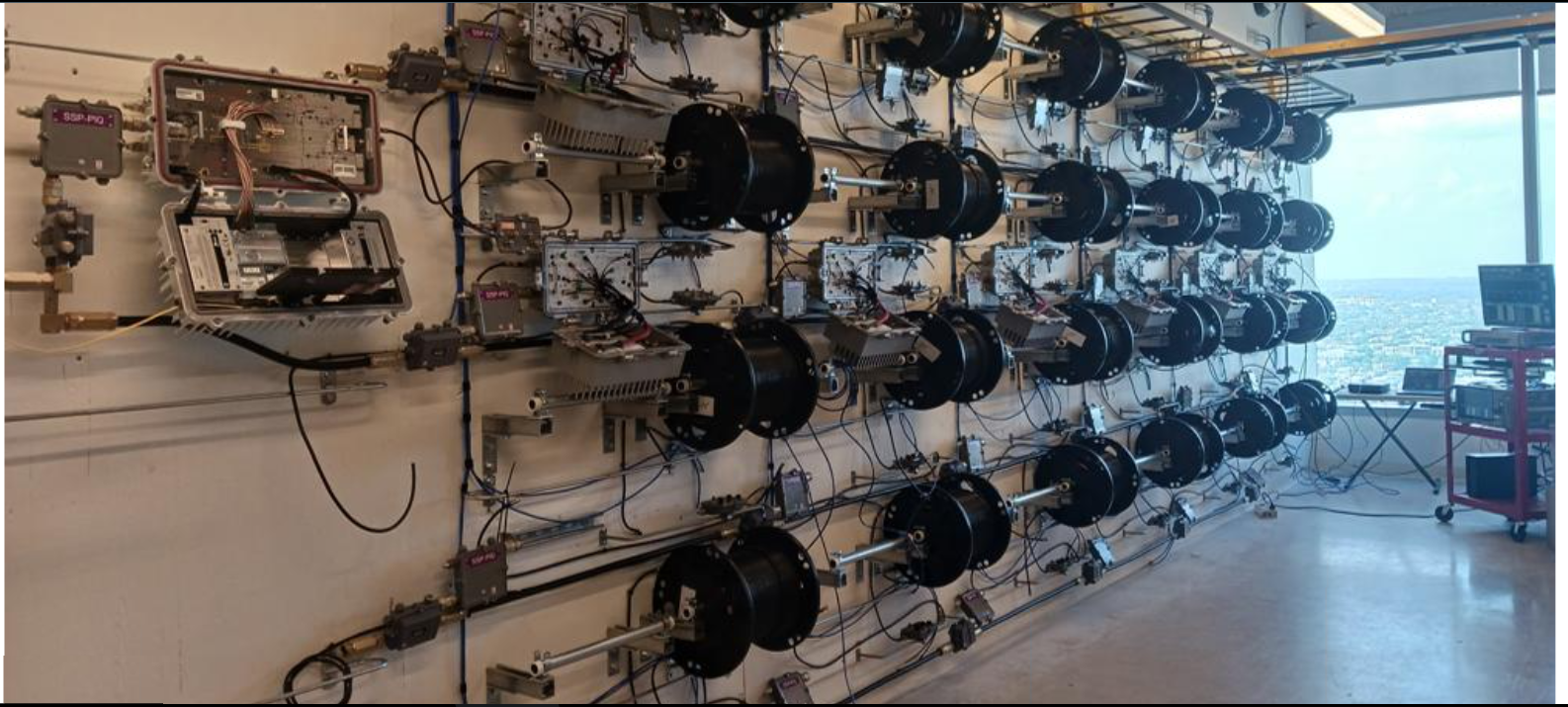
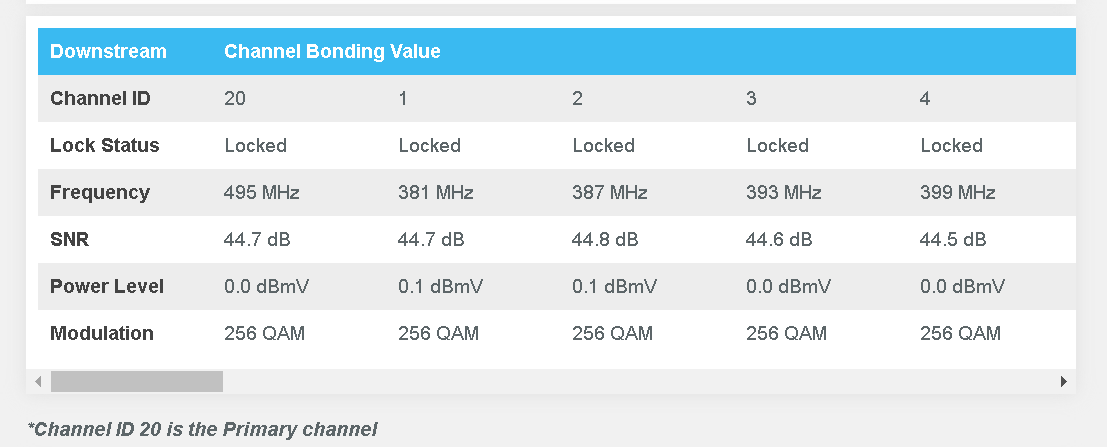
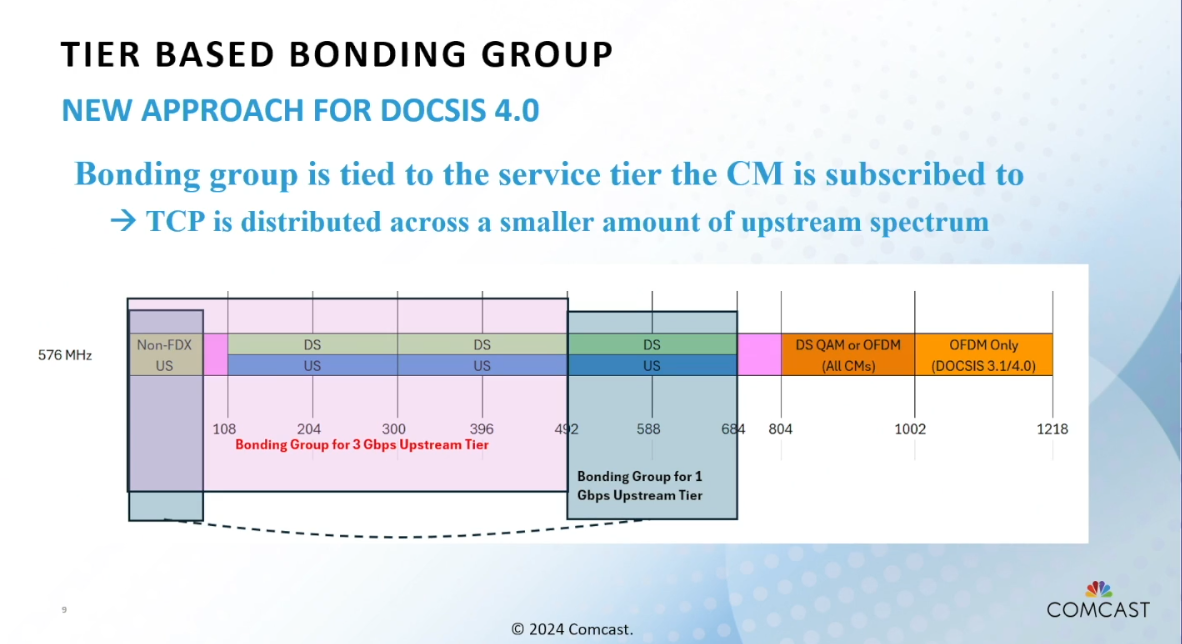
Comcast's 10G demo from a few years ago: https://www.youtube.com/watch?v=B3IjJZ-xmlQ
1st demonstration: Dynamic spectrum
Speed test 1: All RBs are facing downstream
Speed test 2: All RBs are facing upstream
2nd demonstration: Overlapping spectrum
This test uses two transmission groups. The direction of the RBs can be different between groups: The modem in group 1 is transmitting in the spectrum that the modem in group 2 is receiving in, and vice versa.

Modems in TG1 have access to 2x192 MHz OFDM and 2x96 MHz OFDMA.
Modems in TG2 have access to 1x192 MHz OFDM and 4x96 MHz OFDMA.
In practice, overlapping spectrum will play little to no role in the upcoming N+X roll-out, because insufficient isolation in low value taps is a problem. Comcast has done some traffic engineering math and concluded that the most quoted feature of FDX isn't that important. Dynamic spectrum is the key.
Edit, to elaborate. Comcast will be using one transmission group per node leg, at the most. If two legs share the same downstream, each leg may be a separate TG (overlapping spectrum can only happen between legs). They may also go with a single TG for the two legs (no overlapping at all).