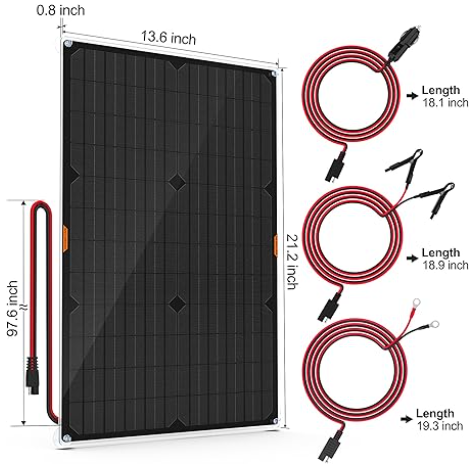
Jbob I was finally able to test things a little more today…in between storms. It appears I’ve only got around .04 mA of current draw. I was surprised it was showing that low. I may test it again later to be sure.
I tested the solar charger not connected to anything and in direct sunlight I was getting above 18 volts output. However with it plugged into the lighter socket and again measuring at the battery I was basically seeing battery charge voltage or perhaps slightly higher.
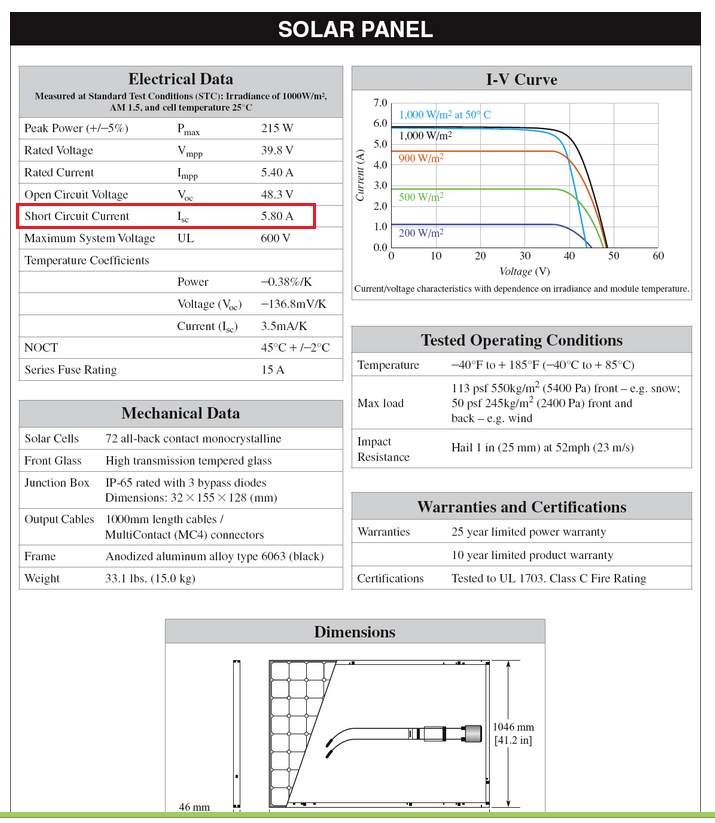
That is open circuit voltage, but the lack of amperage of a 7.5 watt panel under load can deliver is never going to work for your application.
Also keep in mind you should not connect the panel to the vehicle without using a solar charging regulator.
I have a 2023 Ford Explorer that has been repurposed as a yard truck, based on the AH capacity and the continuous loads it required based on my calculations a 62 watt panel, I had a 100 watt in stock and with a basic PWM charger, which is what I had on hand, that combination keeps the battery properly topped off without over charging it.
My guess is you will probably need a similar system though that may need to be modified by your location and the number of solar hours it receives each day.
Solar does not work from sunrise to sunset it’s rated output can only be had from just before noon to early afternoon without any cloud cover.
And those two factors, solar hours and cloud cover is what most people grossly miscalculate, commonly way short of what is needed to make solar work properly for most applications.