Supreme Court Strikes Down School Segregation
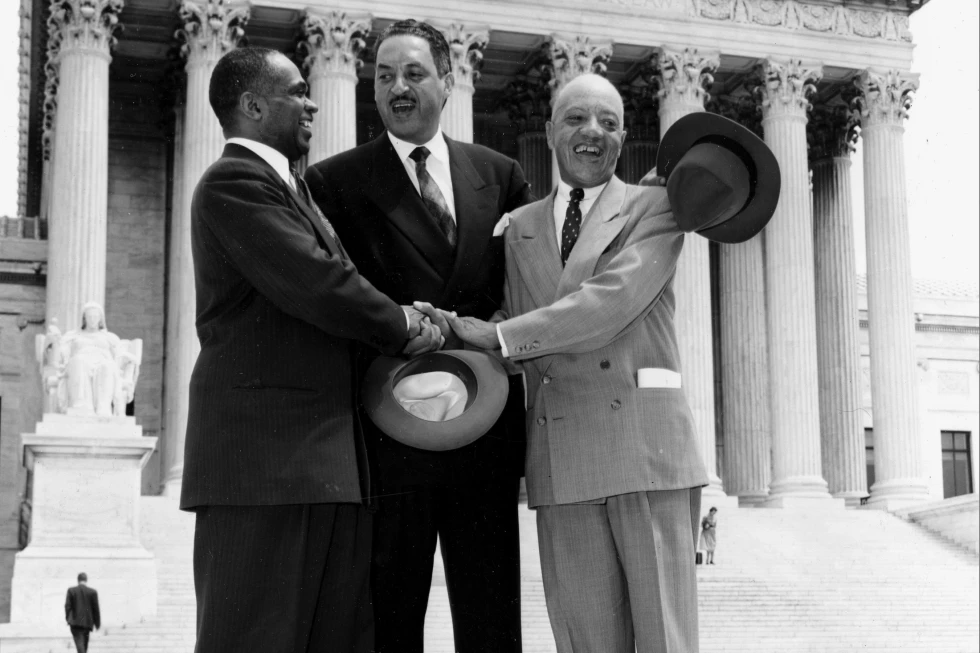 This May 17, 1954 file photo shows, from left, George E.C. Hayes, Thurgood Marshall, and James M. Nabrit joining hands as they pose outside the Supreme Court in Washington. The three lawyers led the fight for abolition of segregation in public schools before the Supreme Court, which ruled that segregation is unconstitutional. (AP Photo)
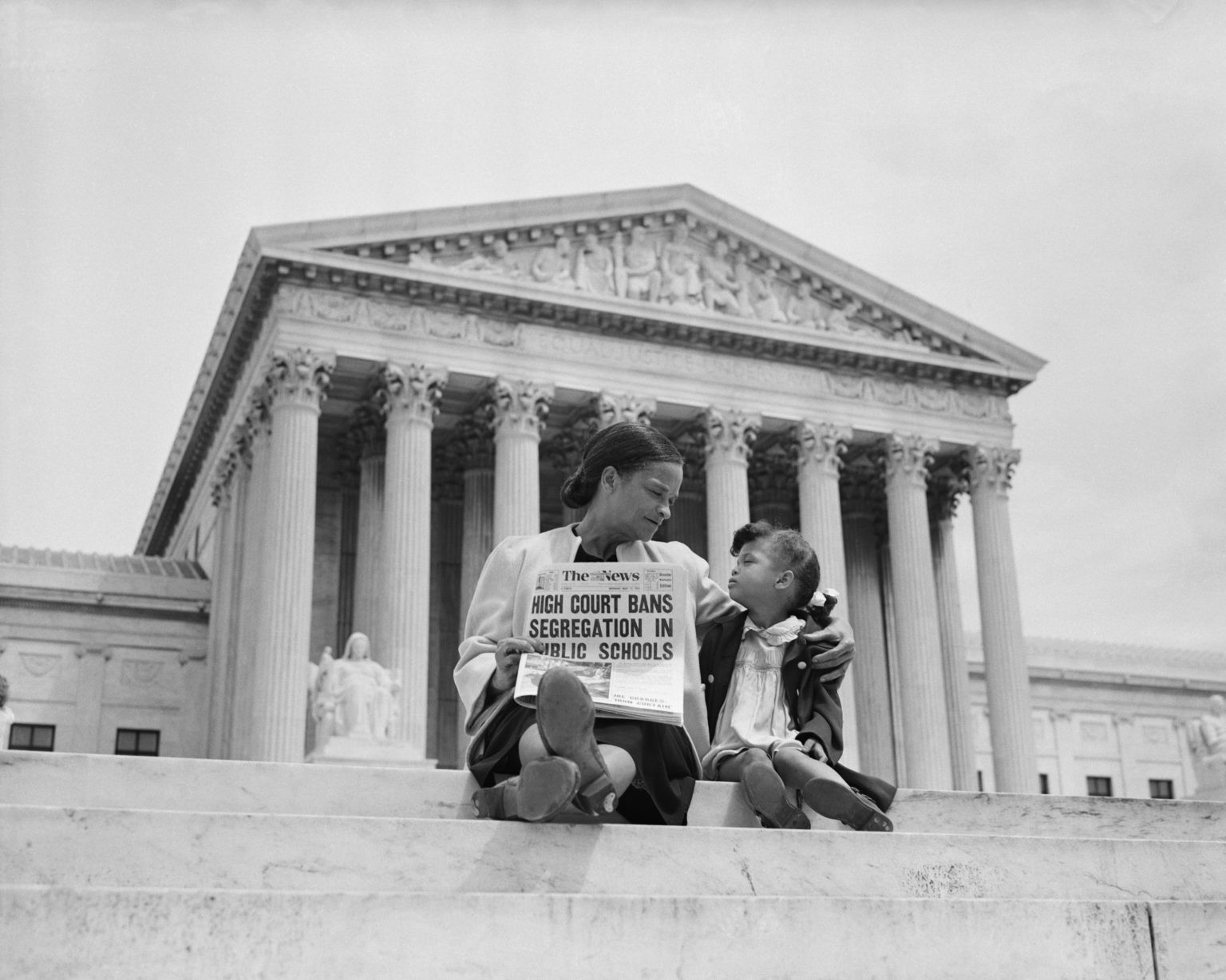
In 1954, in the unanimous ruling of Brown vs. Board of Education of Topeka, Kansas, 347 U.S. 483 (1954), the United States Supreme Court held that racial segregation in public schools was a violation of the Equal Protection Clause of the 14th Amendment to the U.S. Constitution and was thus unconstitutional. The doctrine of “separate but equal” established in 1896 decision of Plessy vs. Ferguson, 163 U.S. 537 (1896), was “rejected” and “ha[d] no place,” as it was the opinion of the Court that separate facilities were “inherently unequal.” Chief Justice Earl Warren took pains to write the opinion of the Court in language and style that everyday Americans could easily read and understand.
The Buttonwood Agreement, a document codifying rules for securities trading, was signed by 24 New York stockbrokers, marking the formation of the New York Stock Exchange in 1792.
The first Kentucky Derby was run at Churchill Downs in Louisville, Kentucky in 1875, with the winning horse Aristides, ridden by jockey Oliver Lewis.
L. Frank Baum’s The Wonderful Wizard of Oz was first published in 1900 and quickly became a classic of children’s literature. The first edition had a printing of 10,000 copies and was sold in advance of the publication date of September 1, 1900. On May 17, 1900, the first copy came off the press–Baum assembled it by hand and presented it to his sister, Mary Louise Baum Brewster. The 1939 film adaption starring Judy Garland as Dorothy is among the most beloved movies in American cinema.
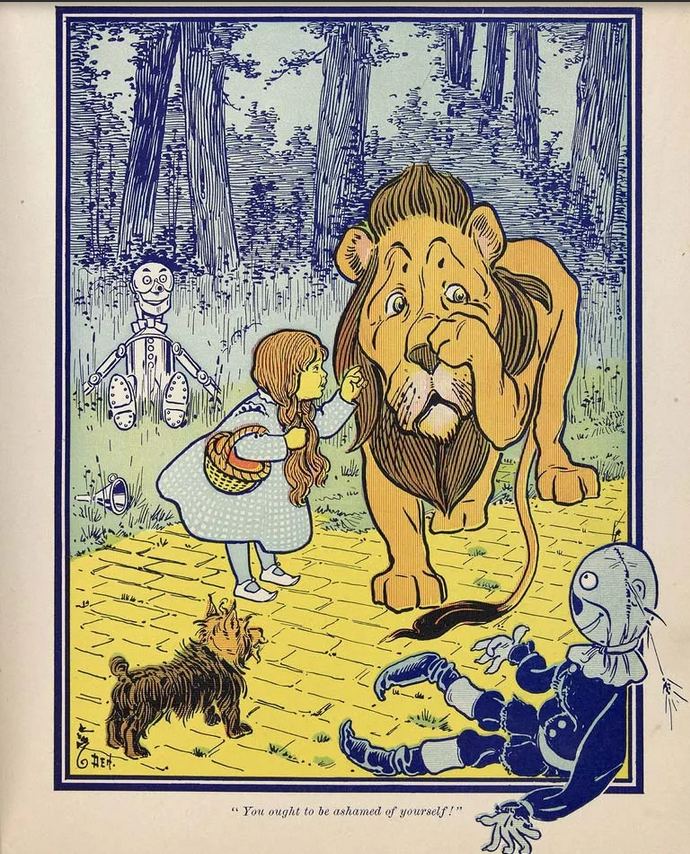 The Wonderful Wizard of Oz as illustrated by W.W. Denslow
In 1903, President Theodore Roosevelt and founder of the Sierra Club John Muir camped out in Yosemite National Park, California and discussed the importance of environmental conservation through, among other things, the ongoing establishment of America’s system of National Parks. See: President Roosevelt’s Historic Visit to Yosemite with John Muir.
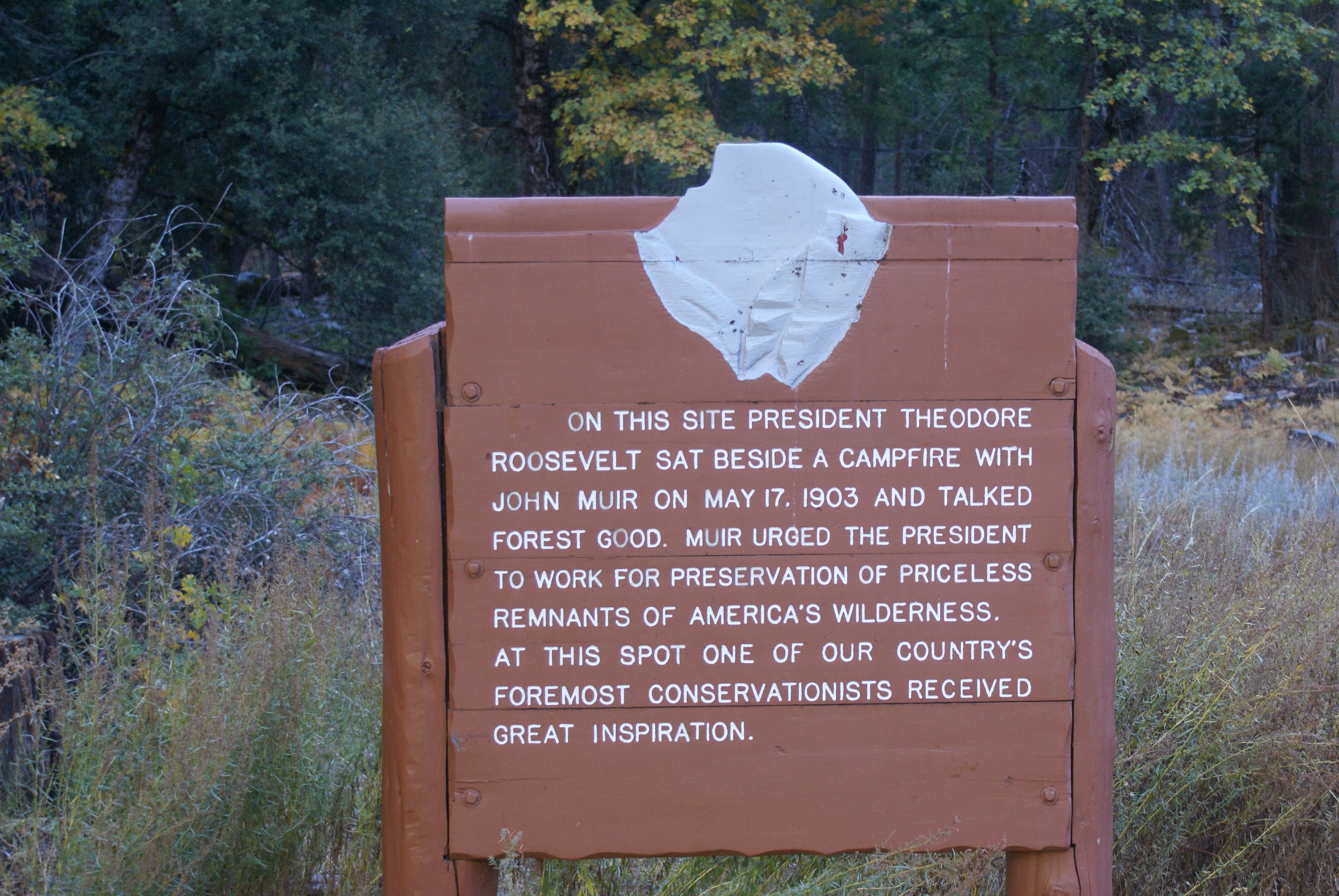 The site of the 1903 campfire with President Theodore Roosevelt and Founder of the Sierra Club John Muir in Yosemite National Park, California. BTW, this is a picture taken by yours truly on a recent visit to Yosemite.
Rioting that claimed 18 lives erupted in Miami after an all-white jury in Tampa acquitted four former Miami police officers of fatally beating black insurance executive Arthur McDuffie in 1980.
Massachusetts became the first U.S. State to allow same-sex marriages in 2004 with the ruling of Goodridge vs. Dept. of Public Health, 798 N.E.2d 941 (Mass. 2003) by the Massachusetts Supreme Judicial Court.