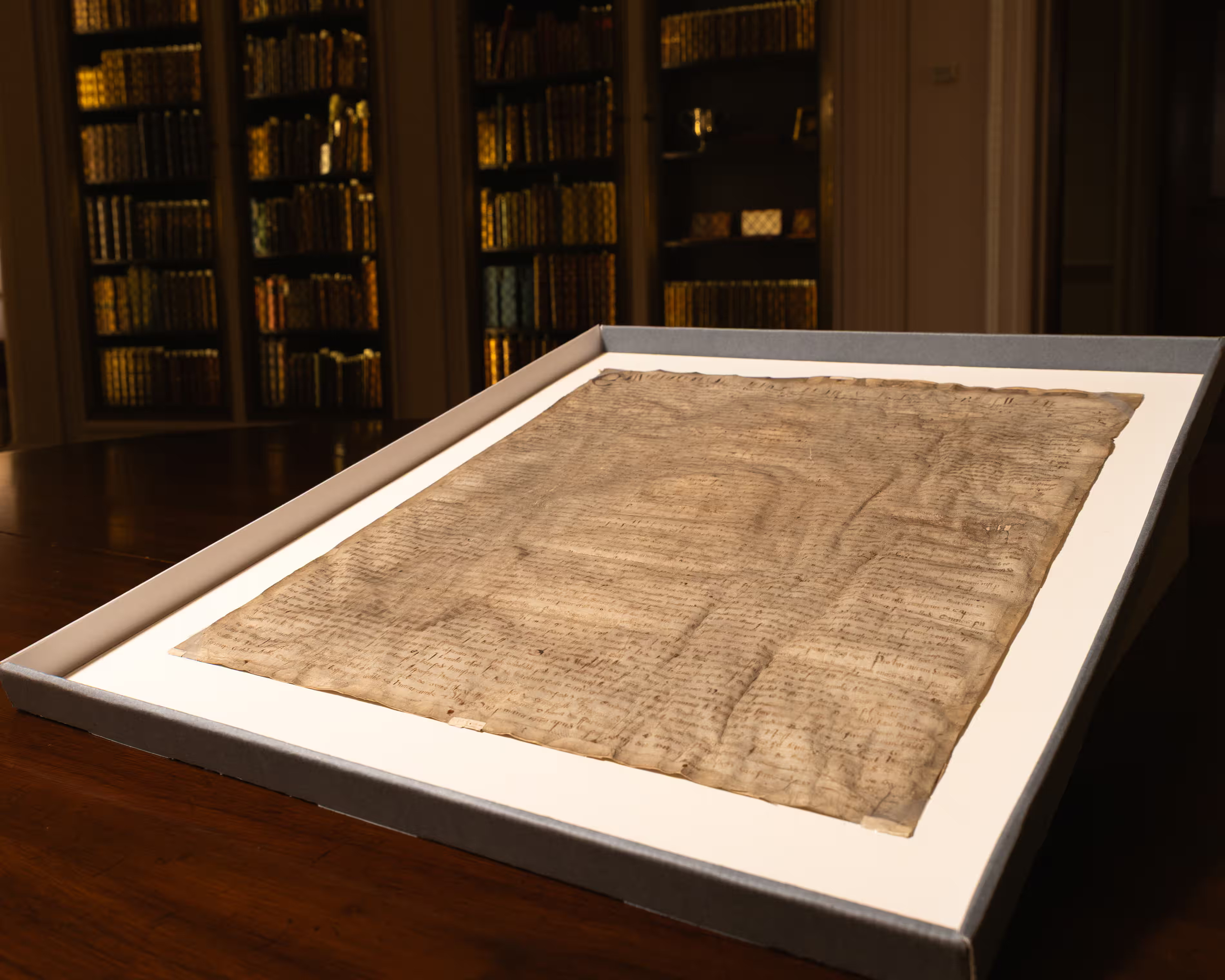
What is the Magna Carta?
Magna Carta (Medieval Latin for “Great Charter”), sometimes spelled Magna Charta, is a royal charter of rights agreed to by King John of England at Runnymede, near Windsor, on 15 June 1215. First drafted by the Archbishop of Canterbury, Cardinal Stephen Langton, to make peace between the unpopular king and a group of rebel barons who demanded that the King confirm the Charter of Liberties, it promised the protection of church rights, protection for the barons from illegal imprisonment, access to swift and impartial justice, and limitations on feudal payments to the Crown, to be implemented through a council of 25 barons. Neither side stood by their commitments, and the charter was annulled by Pope Innocent III, leading to the First Barons’ War. [continues]
When I was a law student in 1980 I worked as a law clerk (for $6.00/hour!) at a law firm doing legal research and writing up court documents (to be signed by the attorneys of course) my boss told me that when researching a case it was not necessary to research the matter back to the Magna Carta.