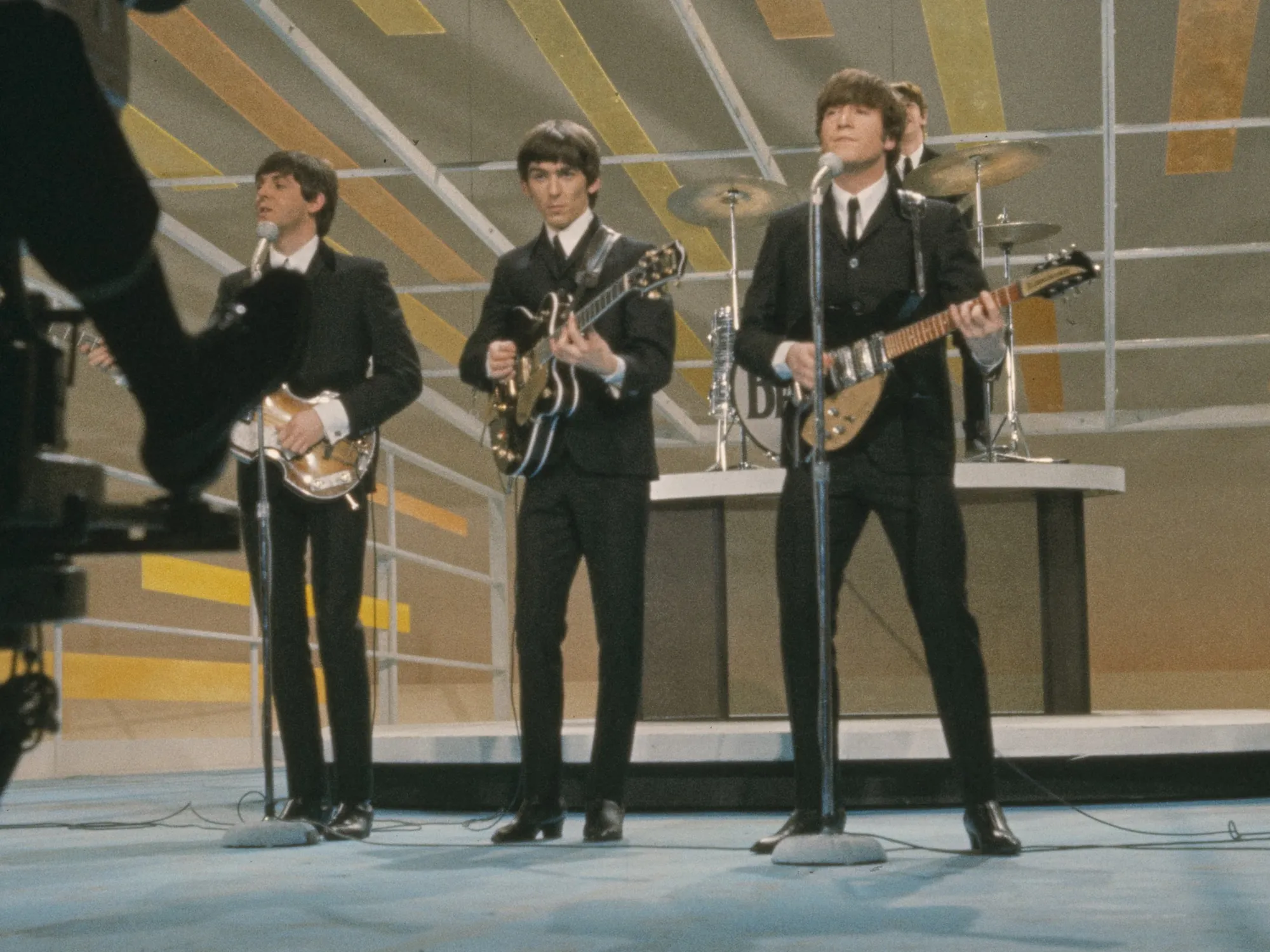
The English rock band The Beatles auditioned for Decca Records at Decca Studios in West Hampstead, north London, on 1 January 1962. They were rejected by the label, who instead signed a contract with Brian Poole and the Tremeloes. The audition was recorded, and five of the songs—“Searchin’”, “Three Cool Cats”, “The Sheik of Araby”, “Like Dreamers Do” and “Hello Little Girl”—were officially released on the compilation Anthology 1 in 1995.
The Audition
John Lennon, Paul McCartney, George Harrison, and Pete Best arrived at the audition, formally known as a “commercial test”, to be headed by Mike Smith with Decca staff, on 1 January 1962 at 10 a.m. However, Smith was late, suffering from a New Year’s party hangover as well as cuts and bruises from a car crash three days before Christmas, slightly delaying the start of the audition. At the audition, the Beatles performed songs chosen by Epstein.
Rejection and aftermath
The Liverpool music paper Mersey Beat was the first to report on the Mike Smith visit, saying that the producer had made a tape of the performance (this amounted to the first “test”), and added “he is convinced that his label will be able to put the Beatles to good use.”
About a month later, Decca rejected the Beatles. The executives’ opinion was “guitar groups are on the way out” and “the Beatles have no future in show business.” Some music historians have suggested, however, that the Beatles’ work that day did not yet reflect their potential, and the “guitar” comment may have been intended as a polite letdown. In his 1964 autobiography, A Cellarful of Noise, Epstein ascribed the “guitar” comment to Dick Rowe; but Rowe denied it as long as he lived. Decca instead chose Brian Poole and the Tremeloes, who auditioned the same day as the Beatles, because they were local and would require lower travel expenses. Many have speculated about who made the decision to reject the Beatles. While various accounts of the audition have been published, most agree that it was either Dick Rowe or Mike Smith. Rowe did, however, offer to arrange for Tony Meehan to produce a Beatles single if Epstein would agree to pay about £100 for the expenses; but a meeting between Epstein and Meehan on 7 February went badly, and the recording never took place.