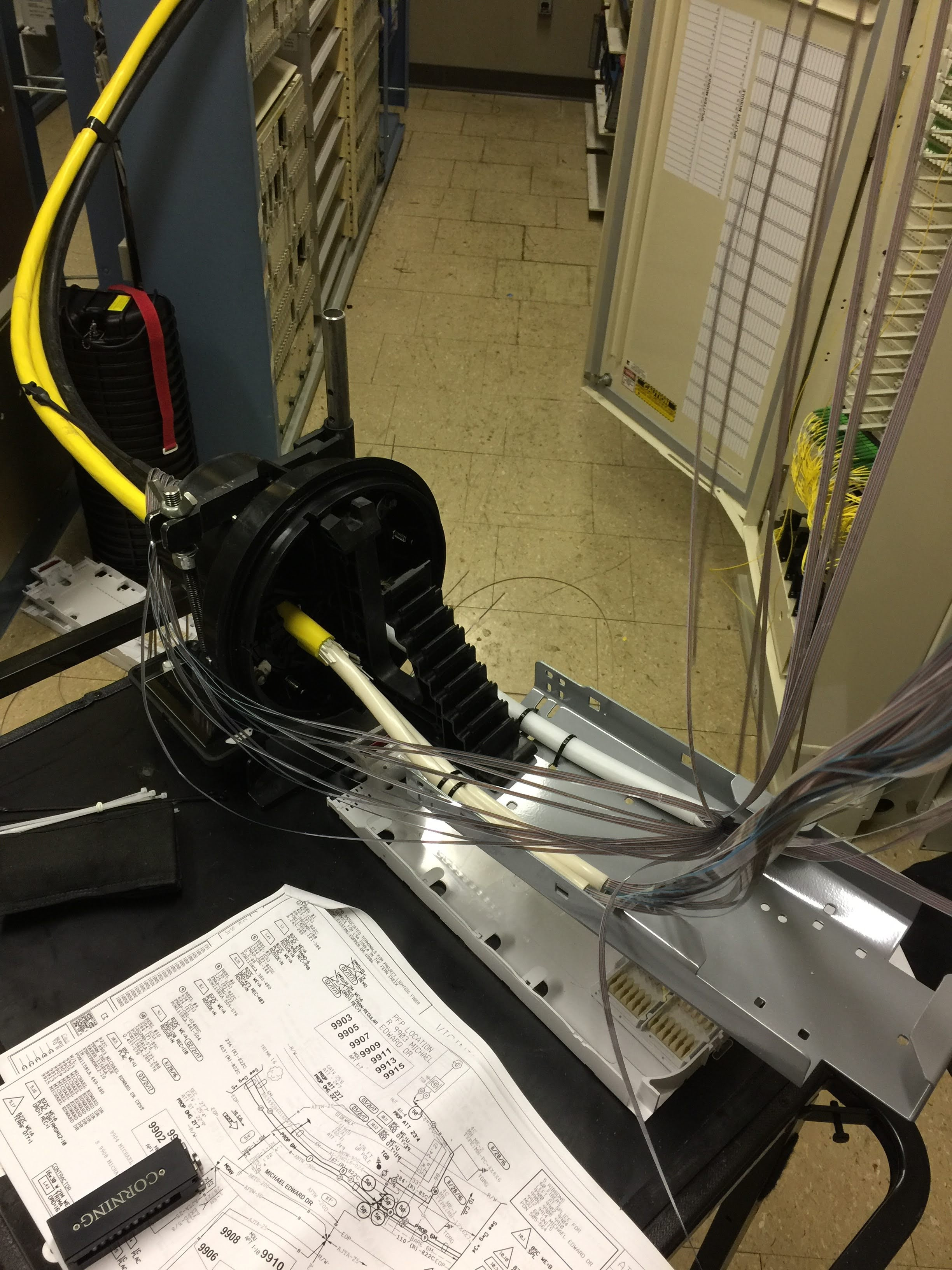
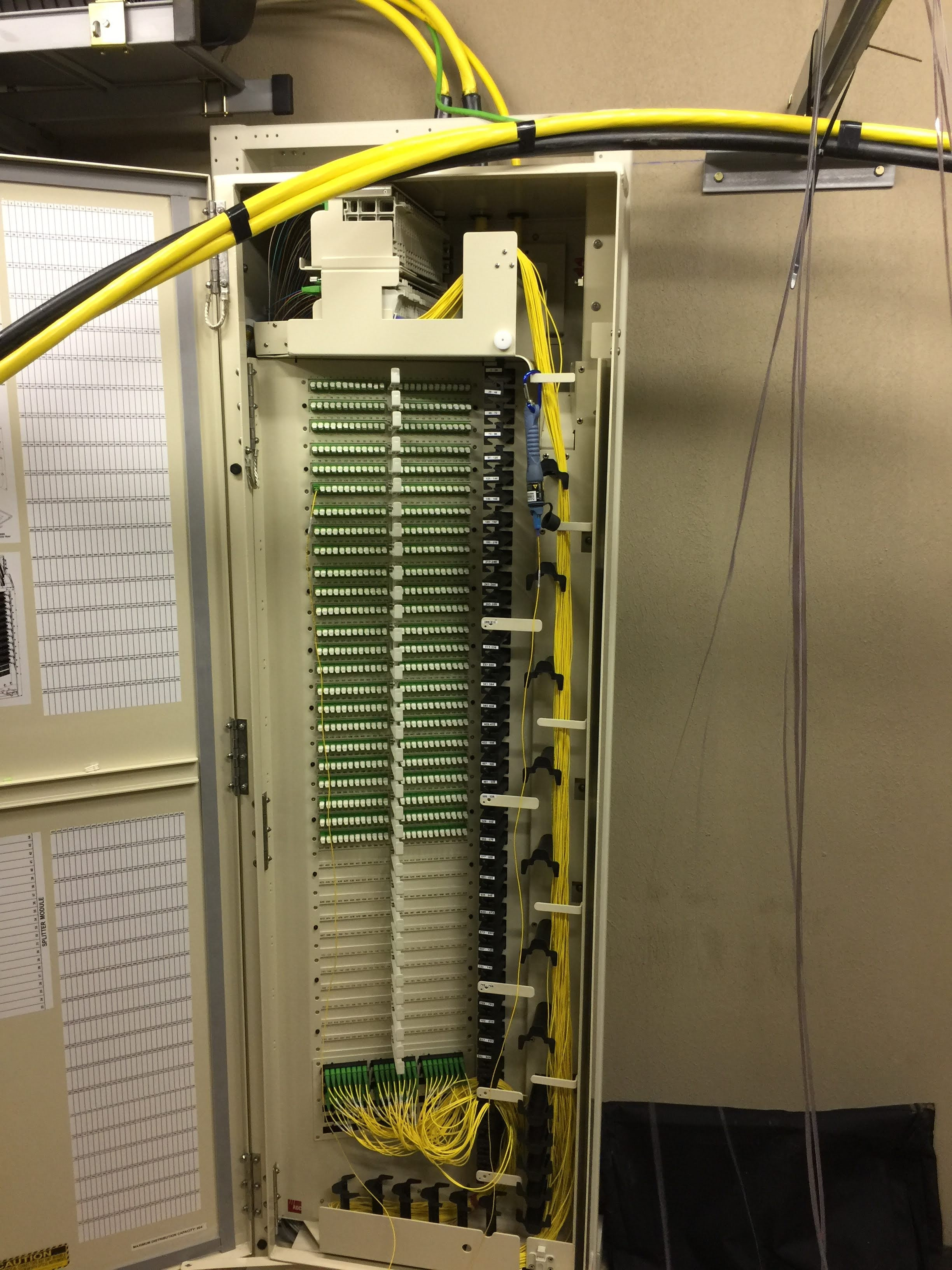
dslwanter So each splitter is 32/1 or 64/1. Up to 32 or 64 subscribers per splitter. Those all share the same light back to the OLT. Multiple splitters can be used to reach larger service areas, each having their own dedicated strand and OLT port. I'm pretty sure they can fit 2 splitters in one PFP box, but not sure if that's only true with 32/1 builds.
I can't say that I've personally seen AT&T do it, but Windstream will sometimes run parallel fiber strands with two terminals on each pole/handhole in dense industrial and commercial areas in order to ensure adequate PON ports and bandwidth are available.
In a residential neighborhood, it would be more likely that OSP engineering would determine exactly how many PFPs, splitters, and terminals are needed to go 1:1 if they build to be able to service every household and scale density accordingly. They seem to reuse existing ROW where DSLAMs are placed for the PFP. I've often seen them pole-mounted with AT&T, either next to the crossboxes and DSLAM boxes or simply out in the field if there is no existing RT/DSLAM nearby. Windstream seems to always ground-mount theirs. I've literally seen them in the ROW in the grass along a road where there is no existing RT.
Also, when AT&T converts GPON to XGS-PON, they will do an overlay with a new, dedicated XGS-PON splitter, even though wavelengths are different. Everyone already patched into the GPON splitter stays until they upgrade to an XGS-PON tier or get moved due to a trouble call. I don't think they've fully decommissioned any converted GPONs yet, but I'm sure that will eventually happen. And my understanding is that converted areas become 64/1, so one XGS-PON splitter is installed for every two GPON.